
I thought my sudden urge to pee meant I had a weak pelvic floor. Six sessions on the BTL Emsella chair and a visit to a pelvic floor physiotherapist revealed that more was going on than I thought.
A month later, the results surprised me. Louise Hilsz shares her personal wellness journey.
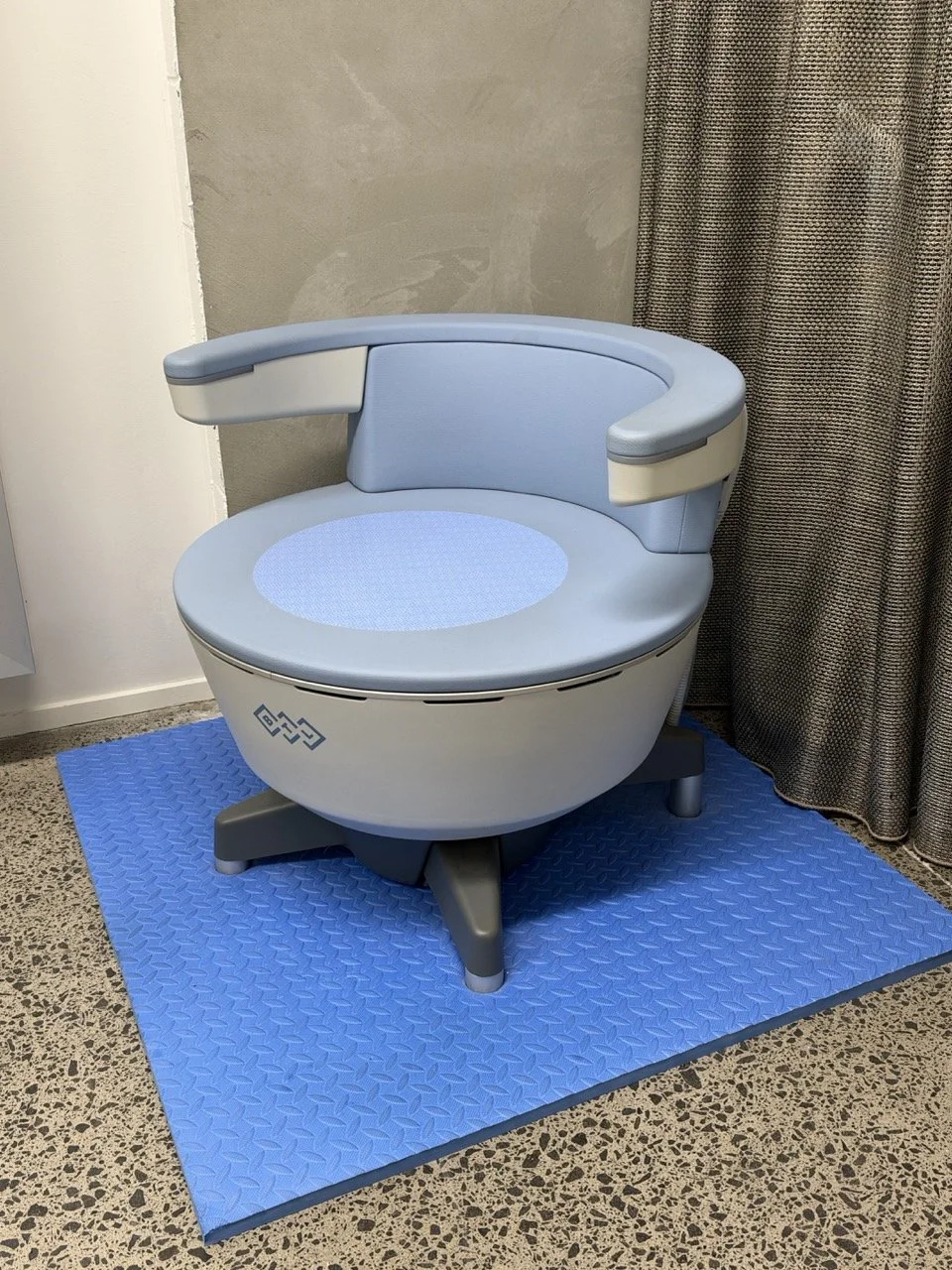
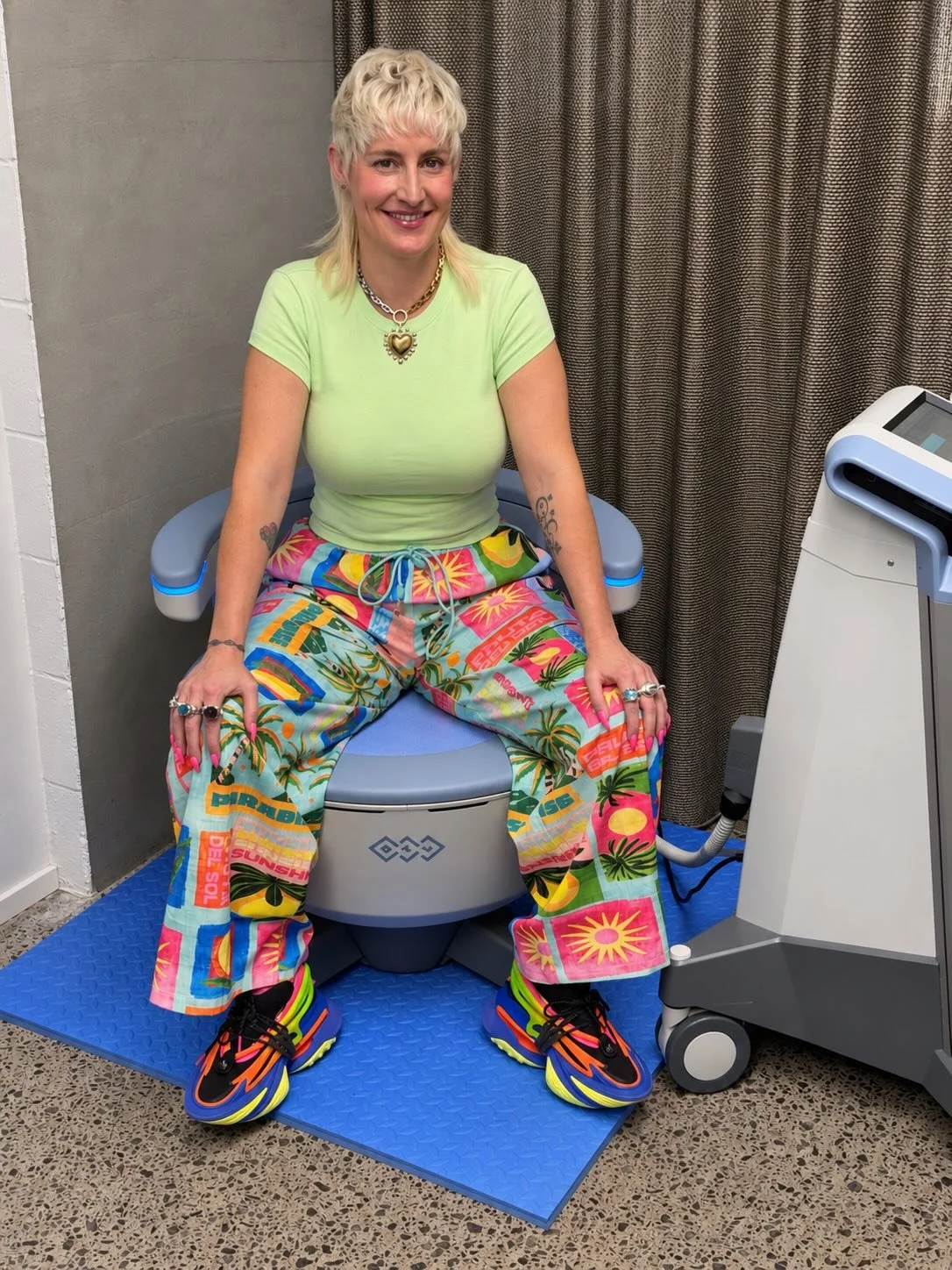
Style director Louise Hilsz on the BTL Emsella chair at Illuminate Me
There are some things we happily discuss with our girlfriends over a glass of wine. Bladder control isn't one of them. But perhaps it should be. For some time, I've had an increasingly frustrating problem: when I need to pee, I need to pee now. The urge can arrive suddenly and intensely, with little warning and little control. There's no leisurely thought that I should probably find a bathroom sometime soon. Once it hits, finding one is a priority. I also don't fit with what I'd always assumed was the typical profile for pelvic-floor problems. I've never been pregnant or had children, so I'd never really considered that my pelvic floor could be responsible. And when I did start thinking about it, I assumed the obvious explanation was that it was weak.
As I'm discovering, pelvic-floor health is far more complicated than simply strong versus weak.
Starting with the Emsella chair
My first step was completing six sessions on the BTL Emsella chair at Illuminate Me in Northcote, Auckland, with facialist and founder Leanne Doré. The non-invasive treatment uses high-intensity focused electromagnetic technology to stimulate thousands of involuntary pelvic floor muscle contractions during a session. It's designed to strengthen the pelvic floor muscles and help improve bladder control, particularly for those experiencing urinary leakage associated with muscle weakness. The best part? You stay fully clothed, sit back, and let the chair do the work. Each session takes approximately 28 minutes, with no downtime. It's certainly a more appealing prospect than spending your day remembering to do pelvic floor exercises.
“My mission at Illuminate Me is to help women feel confident, comfortable and in control of their bodies at every stage of life. Pelvic floor health is something we don’t talk about nearly enough, yet it can have such a significant impact on our everyday lives and confidence.
The BTL Emsella chair offers a non-invasive way to stimulate and strengthen the pelvic-floor muscles, helping to improve muscle function and bladder control for suitable candidates. What’s equally important is understanding that every woman is different. Pelvic floor symptoms can have several causes, and sometimes the muscles need to learn to relax as well as strengthen.
For me, it’s about opening up the conversation, removing the embarrassment and helping women find the right support for their individual needs. No woman should feel she simply has to put up with these symptoms or accept them as part of life”

Leanne Doré Facialist and Founder of Illuminate Me
While strengthening the muscles was one part of the equation, I wanted to understand why I felt such intense urgency in the first place. Through Illuminate Me, I connected with pelvic floor physiotherapist Melanie Bennett, who works at the clinic one day a week.
I booked an appointment expecting her to confirm what I'd already assumed: my pelvic floor needed strengthening. Instead, she told me almost the opposite.
When tight isn't necessarily a good thing
Following an examination, which included an internal assessment and pelvic floor ultrasound, Mel explained that I appeared to have an overactive pelvic floor. Essentially, my pelvic floor muscles may be spending too much time switched on. Rather than simply needing to become stronger, they also need to learn how to properly relax. That was not what I was expecting. We're so accustomed to hearing about pelvic floor health in terms of strengthening — squeeze, hold, release, repeat. But if the muscles are already holding too much tension, constantly asking them to work harder isn't necessarily the answer. A healthy pelvic floor needs to be able to contract, relax and coordinate properly. Strength is only part of the picture.
“Muscle weakness is the inability to generate sufficient force. Leaking urine while coughing could be due to a lack of pelvic floor muscle strength. Overactive muscles are either in a state of constant unnecessary tension or poorly relaxing. They need down-training to improve function. It’s like any other muscle in the body, for example, people who get around with their shoulders up around their ears; the treatment would not be more shoulder shrugs, rather, shoulder relaxation”
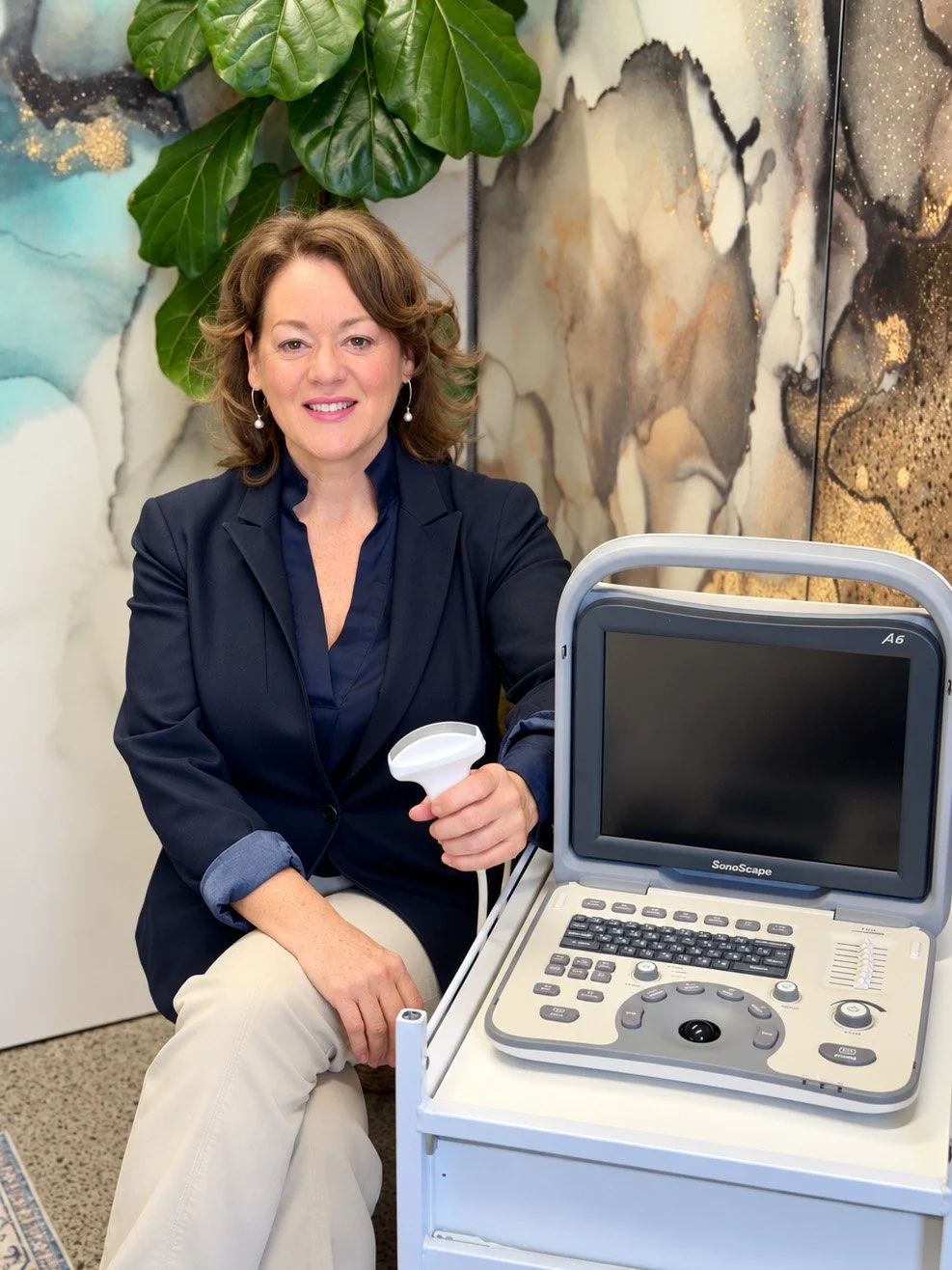
Melanie Bennett Pelvic Floor Physiotherapist
Am I holding tension without realising it?
Mel noticed that I breathe predominantly into my chest rather than allowing my breath to expand into my abdomen. She also suspects I generally hold a lot of tension through my body. That description felt pretty accurate. I lead a busy life, I'm constantly doing something, and relaxing doesn't always come naturally. Even when I exercise, Mel suspects I may be holding my breath and bracing my body without realising it. Her advice sounds remarkably simple: I need to learn to soften. Instead of constantly holding my stomach in, bracing, tightening and rushing from one thing to another, I'm learning to pay attention to my breathing and allow my abdomen and pelvic floor to relax. It's made me realise how rarely I consciously do that.
The other signs I'd never connected
Bladder urgency isn't the only thing happening. I often wake during the night needing to pee. I also experience lower-back pain when I go to bed, which can leave me tossing and turning trying to find a comfortable position. And there's another slightly less glamorous symptom worth talking about: going for a pee will sometimes suddenly make me feel as though I also need to open my bowels. I'd never considered whether any of these things could be connected. Rather than jumping to conclusions, Mel wanted a clearer picture of what my bladder and bowel were actually doing throughout a normal day. So I was given homework.
My two-day toilet diary
For two days, I recorded everything: what I drank and how much, when I urinated, the amount, and every bowel movement. Not the most glamorous diary I've ever kept, but it gave Mel a much clearer picture of my habits and symptoms rather than relying on memory alone. And the results were surprisingly revealing.
I was drinking around three litres of fluid a day, with far too much of it consumed in the three hours before bed. Mel suggested reducing my daily intake to approximately two litres, spreading it more evenly throughout the day and easing up on the evening fluids. A relatively small adjustment, but one that could make a considerable difference to those constant trips to the loo.
I'm also working on my breathing. The aim is to move away from shallow, chest-led breathing and learn to let my abdomen expand and soften naturally.
It sounds simple until you realise you've spent years doing the opposite.
One month later: the results
A month later, I returned to see Mel, armed with another toilet diary — thankfully, just one day this time. And the results were fantastic. I'd reduced my fluid intake, particularly in the evenings, less night time peeing and the difference in my bladder urgency was noticeable. I wasn't experiencing that same frantic need to find a bathroom, and I had a much better ability to hold on when I needed to go.
For someone who had become accustomed to planning around the nearest toilet, that felt like a significant improvement. What surprised me most was how much difference a few relatively straightforward changes could make. I'd started this process thinking I simply needed to strengthen my pelvic floor. Instead, I've learned that bladder control involves much more than muscle strength.
Fluid intake, breathing, tension, bladder habits, and the pelvic floor muscles' ability to relax can all play a role.
Having completed six Emsella sessions alongside physiotherapy, I can't say exactly how much of the improvement came from each treatment or from changing my habits. But together, they've given me a better understanding of what's happening in my body and how to manage it.
“I saw Louise three times. Two appointments covered pelvic floor muscle, bladder and bowel function. At the third and final appointment, she described a marked improvement in symptoms. She had mastered general and pelvic floor muscle relaxation and was breathing normally. Episodes of urgency had significantly reduced and became controllable. There were major changes in her bladder function: night-time urine production reduced from 50 per cent to 25 per cent of her daily total, nighttime peeing reduced from up to three times per night to none or one and her sleep improved. Daytime frequency improved from once every 1-2 hours to 2-4 hourly. Her maximum pee volume halved from one litre to 500 mL. She had been at risk of causing a stretch injury to her bladder due to the decreasing awareness that she was holding so many excessively high volumes. She took more time on the toilet for bladder and bowel emptying and stopped straining, which will help prevent conditions such as haemorrhoids and prolapse. Louise has understood and reversed many long-term bad habits affecting many of her pelvic health systems to gain a successful outcome.”
Five things I've learned about bladder control
1. It's not just about how much you drink, but when.
For me, reducing my daily fluid intake from three litres to approximately two and cutting back in the hours before bed made a noticeable difference. Fluid requirements vary from person to person, so it's worth getting individual advice rather than simply drinking less.
2. Sip, don't gulp.
Constant sipping can be problematic and habit forming. You often end up drinking more than you need. Sip a drink then stop. I'm referring to the 'bottle carriers', sucking out of their bottles all day.
3. Don't rush the loo.
Mel encouraged me to take my time and allow my pelvic floor to relax properly. For me, that means sitting with my knees comfortably apart, leaning slightly forward and avoiding straining. As Mel put it, sit like a bloke and don't rush it.
4. Stop going 'just in case'.
One of the habits I'm becoming more aware of is heading to the bathroom simply because it's convenient, rather than because I actually need to go. Mel explained the importance of developing healthier bladder habits without regularly holding on for excessive periods. Around five toilet visits a day was a useful reference point in my own assessment, although what's normal varies.
5. Hormones may change things later.
Mel also explained that perimenopause and menopause can affect bladder and pelvic floor health as oestrogen levels change. My symptoms could evolve again in the future, and low-dose vaginal oestrogen may be one treatment a doctor considers if appropriate. It's reassuring to know there are options.
The Take home
If there's one thing I've taken away from this experience, it's that pelvic-floor problems aren't necessarily what we think they are.
You don't need to have had children. You don't need to be older. And you certainly shouldn't assume every bladder problem can be solved with more Kegel exercises (pelvic floor muscle training), which involve repeatedly contracting and relaxing the pelvic floor muscles to strengthen them.
For me, the most valuable part of this process has been understanding that my pelvic floor doesn't necessarily need to work harder. Sometimes it needs permission to switch off. After months of feeling as though my bladder was calling the shots, it's nice to feel much more in control.
The treatment details
I completed four sessions on the BTL Emsella chair at Illuminate Me, Northcote, Auckland, with facialist Leanne Doré. A course of six Emsella sessions costs $1,200. Pelvic floor physiotherapist Melanie Bennett also consults from Illuminate Me one day a week.
Editor's note: This article shares my personal experience. Bladder symptoms can have several causes, and treatments such as Emsella aren't necessarily appropriate for everyone, particularly where pelvic floor overactivity is present. A pelvic health physiotherapist or healthcare professional can help assess individual symptoms and recommend suitable treatment.





















Could your pelvic floor be too tight rather than too weak? After struggling with sudden bladder urgency, I tried the BTL Emsella chair and pelvic floor physiotherapy to find out what was really going on.