
Style Director Louise Hilsz is no stranger to testing the latest in beauty and cosmetic treatments. With redness, enlarged pores, and pigmentation among her main skin concerns, she headed to Saint Beauty to test its BBL + MOXI “Power Couple” treatment. Here, she shares what the treatment really feels like, the downtime no one talks about, and what her skin looked like three weeks later.
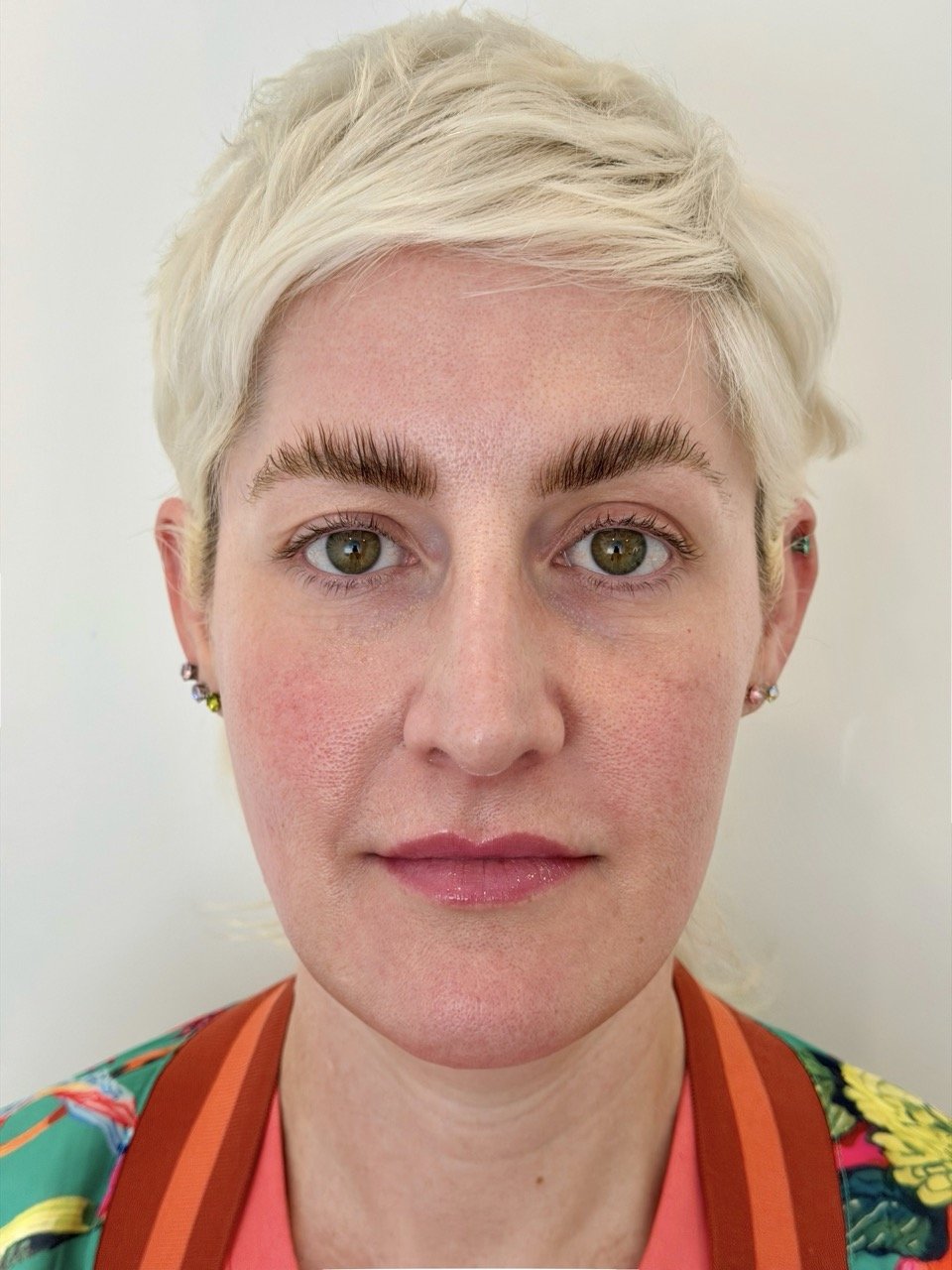
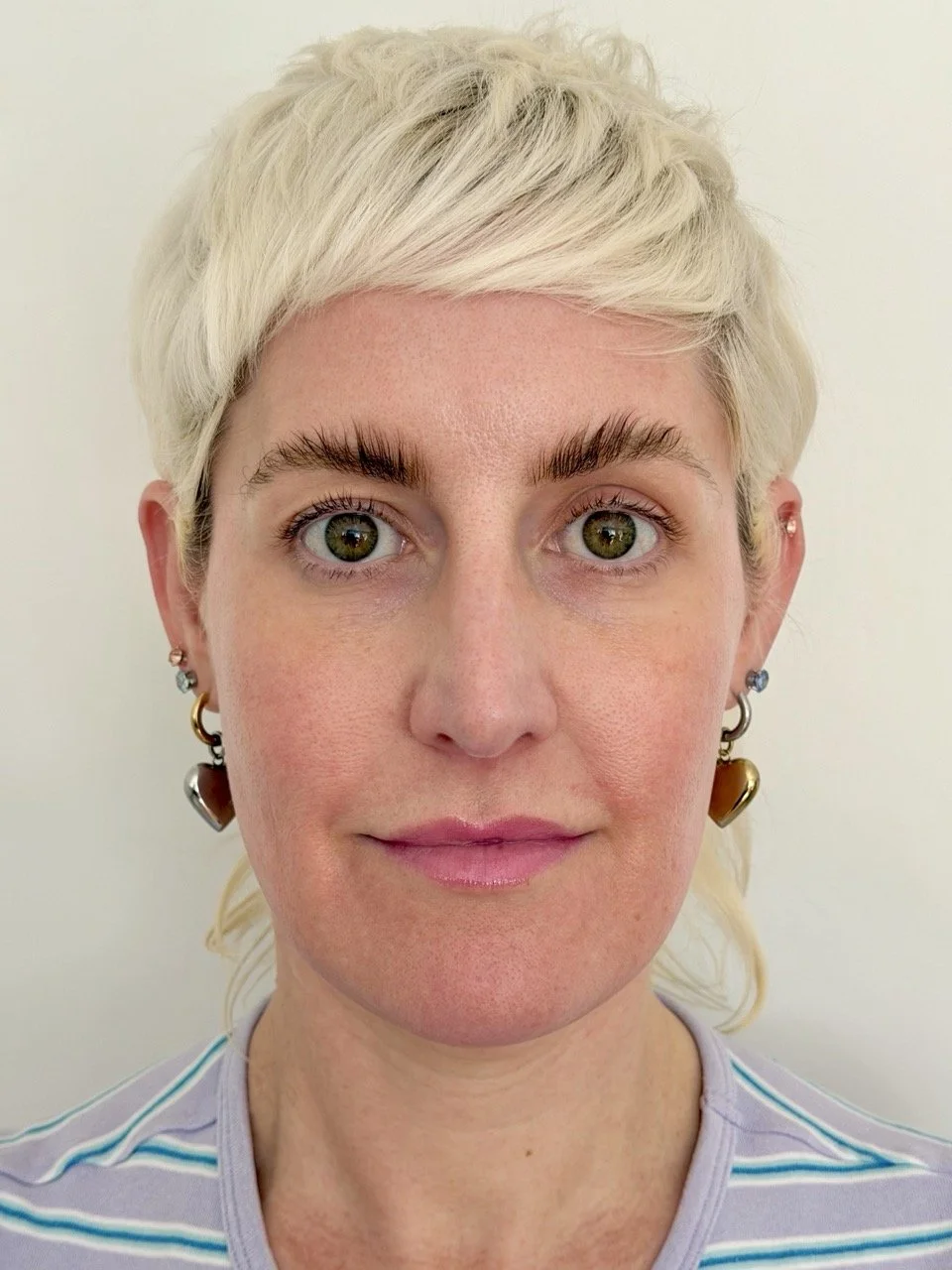
Before versus two weeks after
My skin concerns are fairly straightforward: persistent redness, enlarged pores and some pigmentation around my jawline. I’m not looking to dramatically change my face; I want my skin to look clearer, calmer and more refined. That’s what led me to Saint Beauty in St Heliers to try its BBL + MOXI combination treatment, or as they call it, the Power Couple. Rather than relying on one technology to tackle everything, BBL and MOXI perform different jobs within the same treatment plan. MOXI is a non-ablative 1927nm fractional laser, while BBL uses BroadBand Light.
So, does doubling up actually make a difference?
What Exactly Are BBL and MOXI?
Let’s clear this up first, because BBL, IPL and MOXI tend to get thrown into the same beauty-tech conversation when they’re not the same thing. “It’s a really common question,” says Emma Hughes, co-owner of Saint Beauty. “While IPL has been around for years and is great for treating pigmentation and redness, BBL is a more advanced form of light therapy. It delivers energy more precisely, making treatments more comfortable, consistent and customisable.” MOXI is different again. “It’s a gentle fractional laser that focuses on improving overall skin quality, texture and early signs of ageing,” explains Bex Hunt, co-owner of Saint Beauty. “When combined with BBL, we’re able to treat both the surface and deeper layers of the skin, giving patients a more comprehensive result than traditional IPL alone.” Sciton, the manufacturer behind both technologies, describes MOXI as a non-ablative 1927nm fractional laser designed to address early signs of sun damage and ageing and improve overall tone and clarity.
Why Put the Two Together?

Bex Hunt and Emma Hughes owners of Saint Beauty
This is where the Power Couple concept starts to make sense. “BBL and MOXI complement each other by targeting different layers of the skin,” says Hunt. “BBL treats pigmentation, redness and sun damage, while MOXI improves skin texture and stimulates collagen, giving more comprehensive, natural-looking results in a single treatment plan.” For my skin, that combination appealed because I didn’t have one major concern to correct. I wanted to tackle redness and pigmentation while also improving texture and the appearance of my pores. The team at Saint Beauty believes the combination can address sun damage, pigmentation, redness, uneven skin tone, fine lines, and texture. The clinic specifically recommends stacking MOXI with BBL for clients suited to both technologies.
What Does BBL + MOXI Actually Feel Like?
This was the bit I was most apprehensive about. And, thankfully, it didn’t hurt nearly as much as I expected. My face was numbed beforehand, which certainly helped. I could feel what was happening, but at no point did I find myself wondering why on earth I’d agreed to it. “For MOXI we apply numbing cream beforehand to keep the treatment comfortable,” says Hughes. “You’ll feel a warm, prickly sensation during treatment, and the skin will feel quite warm afterwards.” BBL feels different. “BBL feels like a series of quick, warm snaps on the skin,” says Hunt. “Most people find it very manageable.” That pretty accurately describes my experience. It’s not a relaxing facial, but it was considerably easier than the version I’d created in my head beforehand.
Immediately Afterwards: Very Red
This is where things became a little less glamorous. Immediately after the treatment, my face was very red and swollen. And when I say red, I mean scarlet. My immediately-after photo tells the story better than I can. Hunt says, “BBL itself generally has little downtime, although temporary redness and darkening of pigmentation can occur as the skin clears. With MOXI, there can be more going on.” Hughes adds: “There may be some redness, mild swelling or a sandpaper-like texture for a few days, but downtime is minimal, and most people can return to their normal routine quickly.” Personally, I’d put a small asterisk beside “minimal downtime”. Could I function normally? Absolutely. Would I book this the day before an important event? Absolutely not.
The Morning After: Enter the Sandpaper
The following morning, the swelling had begun to settle, but my skin felt incredibly sandy. Tiny red marks from the treatment were also visible across my face. It turns out this is very much part of the MOXI process. The team at Saint Beauty advises that you can expect tiny areas of treated tissue, known as MENDs, to appear as small dark spots following treatment, while the skin can become dry and rough before naturally shedding. Keep the skin moisturised and, importantly, resist the temptation to pick. The technical explanation aside: my skin felt like fine sandpaper.
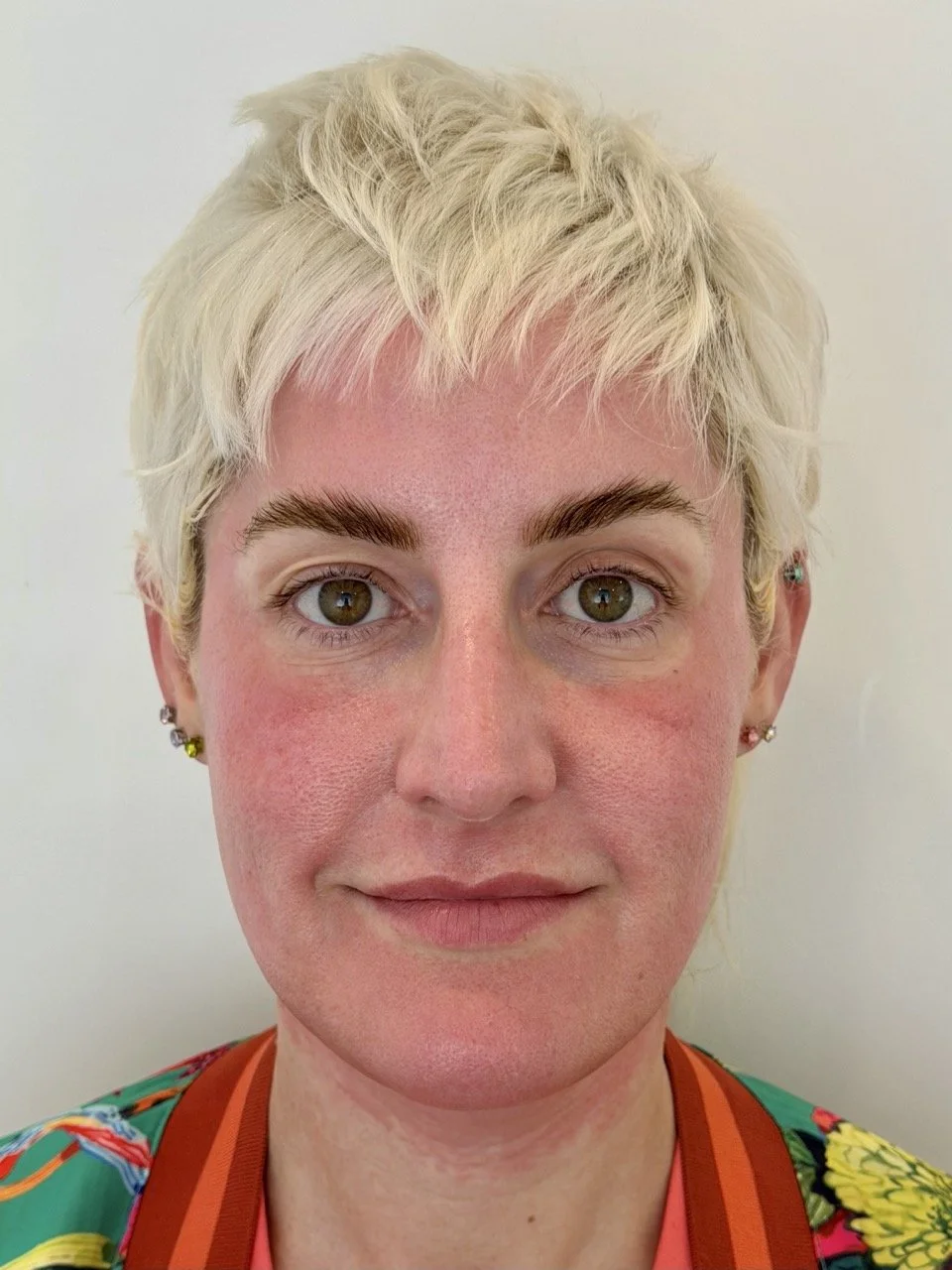
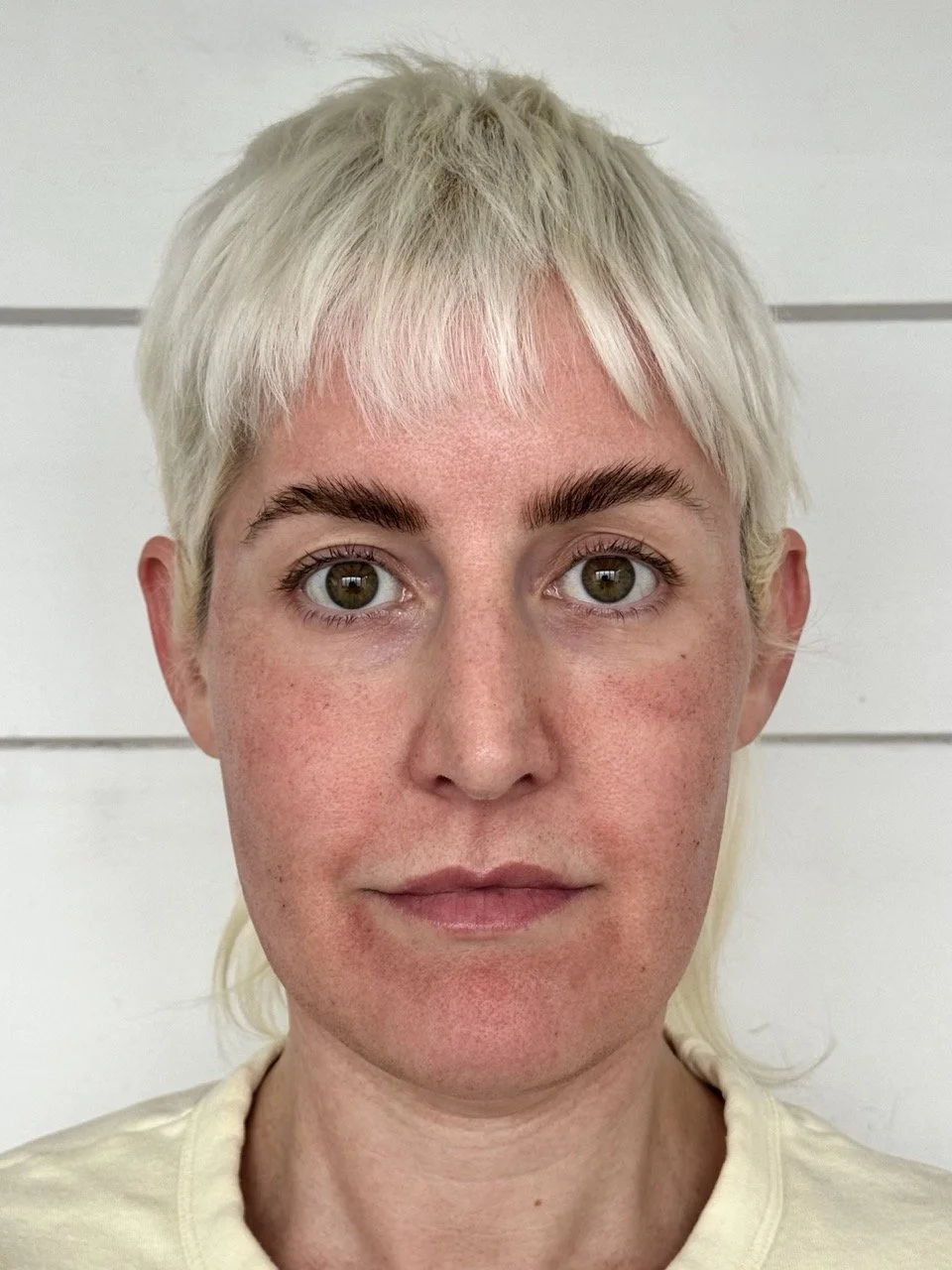
Immediately after and the next day
Then Came Day Four
This was the turning point. By around day four, my skin felt great. The roughness had settled, the redness had significantly reduced, and I was finally at the stage where I could stop thinking about the recovery and start looking at what the treatment had actually done. Around BBL and MOXI treatments, Hunt recommends keeping skincare simple. “A simple, hydrating routine is best around BBL and MOXI, with ingredients such as hyaluronic acid and barrier-supporting moisturisers. We recommend avoiding active skincare such as retinol, AHAs and BHAs for the period advised after treatment. SPF 50+ is essential to protect the skin and maintain your results.”
Three Weeks Later: What Changed?
This is where the photographs become interesting. Three weeks after my treatment, the biggest change I can see is the overall quality of my skin. It looks calmer and more even, with less obvious redness. The slight pigmentation around my jawline also appears less noticeable, while the overall texture looks more refined. Enlarged pores are one of my bugbears, and while pores don’t literally open and close, smoother skin texture can make them appear less prominent. In my three-week photo, that's one of the changes I notice. Hunt says this is typically when the results begin to become more apparent. “After the first treatment, the skin will typically look more refreshed and brighter, with a more even, refined texture and pigmentation appearing lighter. Results will continue to build with each treatment.”
And that's important, because one treatment isn't necessarily the finished result.
So, Do You Need Three Treatments?
The team at Saint Beauty generally recommend a course of three treatments for the best overall result. “We usually recommend a course of three treatments to achieve the best overall result,” says Hunt.
“Each treatment builds on the last, with improvements in brightness, pigmentation, tone and texture becoming more noticeable as the course progresses.” So, my three-week result is really only the first instalment. There’s also the longer-term collagen response to consider. “Collagen is one of the key proteins that gives our skin its structure, strength and firmness,” Hunt explains. “By stimulating new collagen production, both treatments support the skin’s natural renewal process, helping it become firmer, smoother and more resilient over time. The results are gradual, with improvements continuing to develop over the following weeks and months.”
Who Is the Power Couple For?
“The Power Couple is ideal for anyone wanting to improve overall skin quality while addressing concerns such as pigmentation, redness, uneven tone or texture, and early signs of ageing,” says Hunt. “It’s a great option for those looking for a natural, refreshed result, with the treatments tailored to suit each person’s skin and goals.” However, this isn't a treatment to choose purely because you've seen someone else's before-and-after. Skin type matters. Hunt says, “MOXI is versatile across skin tones, while BBL is best suited to Fitzpatrick skin types I–IV, making the consultation and individual treatment settings particularly important. Sciton states that MOXI targets water within the skin rather than melanin and can therefore be used across skin types year-round.
What About Maintenance?
After completing an initial course, the team at Saint Beauty recommend moving into a maintenance programme tailored to the individual. “After your initial course of three treatments, we recommend moving into our Sciton Forever Young treatments to maintain your results. Regular SPF is also essential to protect your skin and help preserve your results.” Hunt adds: “Forever Young is a simple maintenance treatment that supports ongoing skin renewal and collagen production. We’ll personalise your treatment schedule based on your skin and goals.”
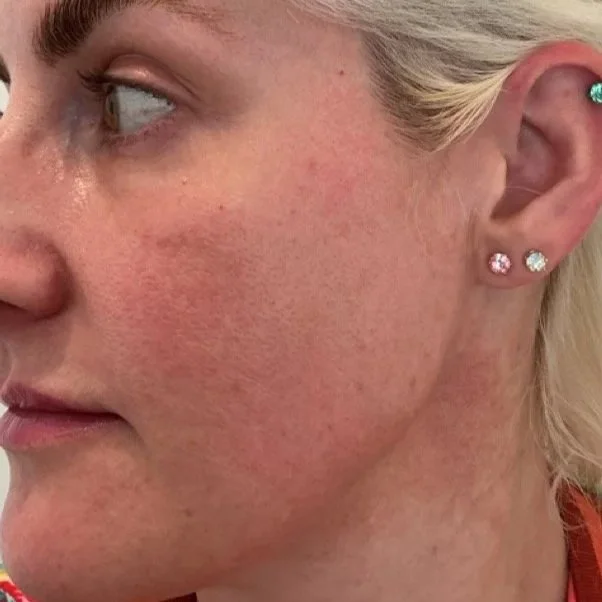
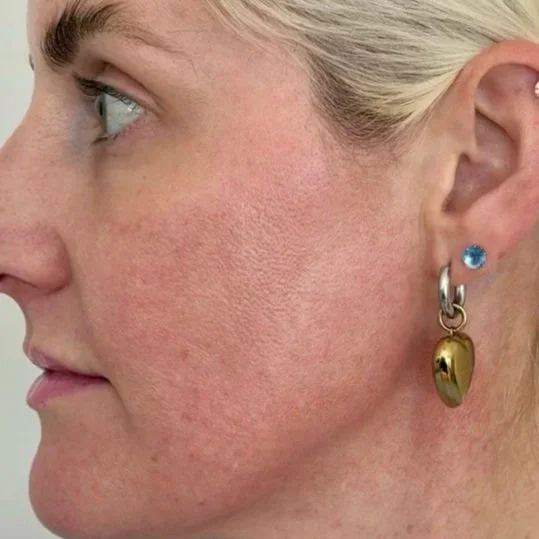
Before versus after three weeks
The Science Has Me Interested Too
One of the more interesting conversations I had with the Saint Beauty team was about where light and laser technology is heading. “I’m particularly excited by the science behind light-based treatments,” says Hunt. “The Stanford research into Sciton BBL and the ‘Forever Young’ study is fascinating because it suggests we may be able to influence the biology of ageing, not just its visible signs.” It's an intriguing area of research, although I think it's important to distinguish research into biological markers associated with ageing from claiming that a cosmetic treatment can literally stop or reverse the ageing process. For Hunt, the increasing precision of the technology is what's exciting. “I’m excited by how precise and versatile laser and light technology has become. We can increasingly tailor treatments to the individual, targeting different aspects of skin ageing with minimal downtime. It’s an exciting time for personalised skin rejuvenation.”
My Verdict
Would I do it again? Yes. The treatment itself was nowhere near as uncomfortable as I'd anticipated. The first couple of days weren't particularly pretty — and I'd personally allow a few quiet days afterwards rather than taking “minimal downtime” too literally — but the recovery was short-lived. By day four, my skin felt great. And three weeks later, the change isn't one dramatic thing. My skin simply looks better. The redness appears calmer, the tone looks more even, the pigmentation around my jawline is less noticeable, and the overall texture looks more refined. For me, that's actually the appeal. I don't want people looking at my face and immediately knowing I've had a treatment. I want them wondering why my skin looks so good.
And after one BBL + MOXI treatment, I'm interested to see what treatments two and three can do.
How much does the ‘Power Couple’ cost
MOXI plus BBL Stack costs: Face $950. Face and Neck $1150. Face, neck and décolletage $1550. Décolletage only $950.
BeautyEQ was invited to experience the BBL + MOXI Power Couple treatment at Saint Beauty. Results and recovery vary between individuals.